Retaining Walls in Nashville
If your yard is fighting you slopes that wash out after every rain, terraced areas caving in, or flat usable space you just can't seem to get a properly built retaining wall changes the equation. Retaining walls in Nashville aren't just about looks. They're structural solutions for a region with rolling terrain, clay-heavy soil, and enough seasonal rain to turn a poorly graded yard into an ongoing problem. Martin Outdoor Living designs and builds retaining walls for residential homeowners across the Nashville metro, handling everything from site assessment and design through construction and drainage.
What to Expect From a Retaining Wall Project
Before anything gets built, you need a clear picture of what's actually going on in your yard. Poor drainage, unstable slopes, or inadequate backfill are the root causes behind most retaining wall failures and none of that shows up in a quick walkthrough.
Martin Outdoor Living takes time to fully design your space before recommending a scope of work. That means you understand exactly what you're getting, why it's being built that way, and what it will cost before anything breaks ground. No surprises mid-project. No scope creep that wasn't accounted for.
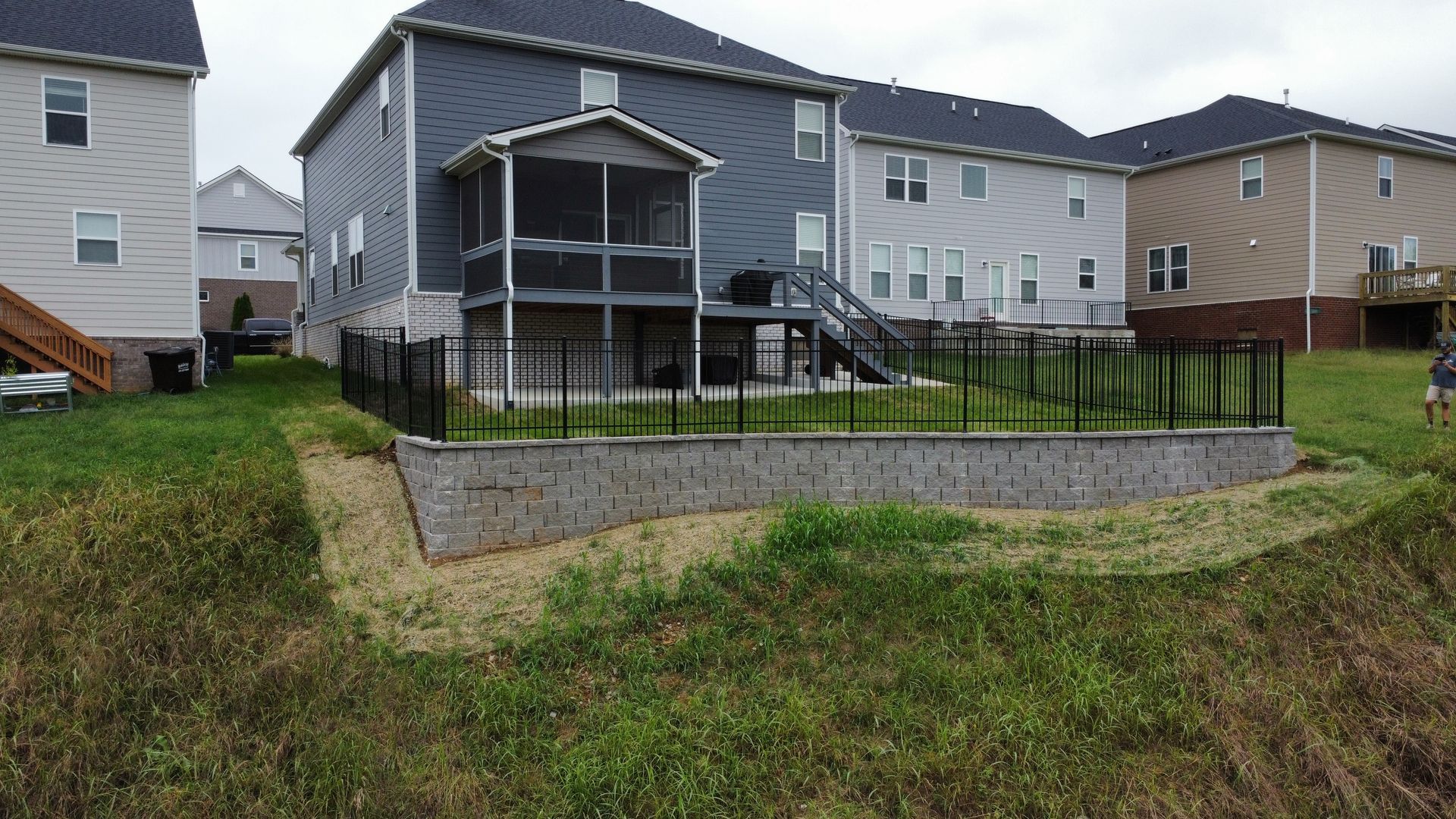
The construction phase depends on your site, wall height, and materials. A straightforward gravity wall on a gentle slope installs differently than a reinforced segmental block wall holding back significant grade change. Both require proper base preparation, compacted fill, and drainage behind the wall because a retaining wall that doesn't manage water isn't going to last, regardless of how good the stone looks.
Once the wall is in place, the difference in your yard is typically immediate: flat, usable space where there wasn't any, a yard that drains properly instead of pooling, and a structure that visually anchors the landscape rather than fighting it.
Who Is a Good Candidate for a Retaining Wall?
You don't need a dramatic hillside to benefit from a retaining wall. Nashville homeowners typically reach out when they're dealing with one or more of the following:
- Erosion along a slope or embankment - soil washing downhill after rain, pulling mulch with it and depositing debris in the wrong places
- Unusable yard space - a slope too steep to mow, landscape, or actually use for anything
- Drainage problems tied to grading - water pooling near the foundation, running toward the house, or collecting in low spots after rain
- Existing wall failure - a block wall that's bowing, cracking, or pulling apart and needs to be properly rebuilt
- Landscaping and outdoor living plans - if you're adding a patio, outdoor kitchen, or garden area to a sloped property, a retaining wall often has to come first
If you're not sure whether a wall is what your yard actually needs, that's exactly what the design process is for. Martin Outdoor Living assesses the site before making recommendations, so you're not being sold a wall you don't need.
Why Martin Outdoor Living for Retaining Walls in Nashville?
Nashville has no shortage of contractors who will put up a wall. Fewer of them will stop to figure out why your slope is failing, what the drainage situation looks like, and whether the wall they're proposing is actually sized right for the load it's going to carry.
Martin Outdoor Living is a design-build contractor meaning the design and construction happen under the same roof. You're not working with a designer who hands off to a crew they've never met. The people who design your wall understand how it gets built, and the people building it understand why it was designed that way. That's a meaningful distinction on structural projects where the details matter.
The company is based in Lebanon and Mount Juliet, TN, and works primarily throughout the Nashville metro. That means they know the local terrain, the soil conditions that are common in Middle Tennessee, and the permitting requirements that apply to retaining wall projects in this area.
The approach is craft-first, not volume-first. Projects are treated as long-term investments in your property — not fast closes on a job board. If you've worked with contractors who pushed for a quick quote and faster close, Martin Outdoor Living operates differently.
Retaining Wall Materials: What Works in Middle Tennessee
Material choice affects cost, appearance, longevity, and how well the wall performs in Tennessee's climate — which includes wet winters, humid summers, freeze-thaw cycles, and soil that tends to expand and shift with moisture changes.
Common options for retaining walls in Nashville:
- Natural Stone
Dry-stacked or mortared natural stone walls have a timeless look and handle well in Tennessee's climate when properly built. Stone doesn't corrode, holds up well over decades, and integrates naturally into landscape plantings. It tends to cost more upfront but typically requires less maintenance over time.
- Segmental Retaining Wall Block
Pre-engineered block systems sometimes called retaining wall blocks are widely used for residential walls and offer a consistent look with reliable engineering specs. They're a practical choice for walls that need to hold significant grade change, since they're designed to interlock and can be reinforced with geogrid for taller applications.
- Timber and Treated Lumber
Less common in newer installations. Timber walls can be cost-effective for shorter walls with modest loads, but they have a shorter lifespan in wet Tennessee soil and typically aren't the right call for anything structural or long-term.
The right material for your project depends on your site, your budget, and how the wall fits into the broader design of your outdoor space. That's a conversation worth having before you settle on anything.
Frequently Asked Questions About Retaining Walls in Nashville
How much do retaining walls cost in Nashville, TN?
Retaining wall costs vary significantly based on material, wall height, length, site conditions, and whether drainage work is required alongside the wall. Natural stone and engineered block walls cost more than timber, and taller walls require more labor, base preparation, and sometimes geogrid reinforcement. Because every site is different, Martin Outdoor Living works through a full design process before presenting pricing, so the number you get reflects your actual project, not a ballpark that shifts once work starts.
What is the best material for retaining walls in Tennessee's climate?
Middle Tennessee's combination of clay soil, seasonal rainfall, and freeze-thaw cycles puts real stress on retaining walls. Both natural stone and quality segmental block systems perform well here when they're properly built with adequate drainage behind the wall. The material that's "best" depends on your wall height, load requirements, aesthetic preferences, and budget. There's no universal answer — it's worth discussing your specific situation before making the call.
How long do retaining walls last in Nashville?
A well-built retaining wall with proper drainage and base preparation can last decades. Natural stone walls have the longest track record in terms of longevity. Block systems, when installed to manufacturer specs and with appropriate drainage, also hold up well over time. Walls fail prematurely when drainage is inadequate, the base isn't properly prepared, or the wall isn't designed for the load it's actually carrying, not because of the material itself.
Do I need a permit for a retaining wall in Nashville?
Permit requirements in Nashville and surrounding jurisdictions depend on wall height and location on your property. Generally speaking, walls above a certain height often four feet, require a permit and sometimes engineered drawings. Requirements vary by municipality, so it's important to confirm with your local building department or work with a contractor familiar with local code. Martin Outdoor Living works throughout the Nashville metro and is familiar with permit requirements in the area.
What causes retaining wall failure and how do you prevent it?
The most common cause of retaining wall failure is water. When drainage behind the wall isn't addressed, hydrostatic pressure builds up and pushes the wall forward or causes it to crack and bow. Poor base preparation, inadequate footing depth, and undersized walls for the load they're carrying are other common culprits. Prevention comes down to proper engineering from the start: the right wall type for the application, a compacted base, drainage aggregate and pipe behind the wall, and construction that matches what the site actually requires.
Ready to Talk About Your Yard?
If you've got a slope that's causing problems, or you're planning an outdoor project that requires regrading and structural work, Martin Outdoor Living is worth a conversation. Call 615-881-5160 or reach out through the website to get started.
